Reading
The Richest Man in Babylon
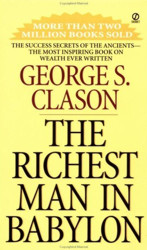 If I could only recommend one book on personal finance, this would be it. I have given away more than 60 copies of this book and will likely give away hundreds of copies in my lifetime. I read this book when I was 19 years old and it completely opened my eyes to the elegant simplicity of gaining and managing wealth. The advice is straight-forward and timeless.
The fictitious backdrop for this book is set in ancient Mesopotamia. The richest man in Babylon helps many of the common citizens accumulate wealth, making Babylon the wealthiest of the ancient cities. The stories are told in parable form and the characters each have their own unique problems and circumstances. Each story covers an important facet of personal finance and the methods the characters use to succeed. This book is profound and entertaining, in addition to being informative.
I can’t think of a better investment than ten bucks and a couple of hours reading this book. If you are new to personal finance, this book is a great place to start learning.
The Millionaire Next Door
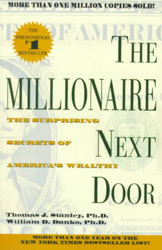 The authors of this book interviewed thousands of millionaires and discovered that most weren’t high-income professionals, such as doctors and lawyers. Instead, they found that average American millionaires were often frugal people, who were self-employed in mundane professions. They often live in modest houses and drive domestic cars and trucks. People who accumulate wealth are usually conservative with their purchases.
I have heard this book described as “how to be cheap and get rich in 40 years” and that’s a fair assessment. While a frugal lifestyle may not appeal to everyone, this book does offer a reliable blueprint for accumulating wealth. Most personal finance books offer empty promises and not much useful content. That’s probably why The Millionaire Next Door remains so popular long after it was initially published.
The most important concept I took away from reading this book, is that you are four times more likely to become a millionaire if you are self-employed. That is a very powerful statistic. It’s a long read, but definitely worth your time.
The Type-Z Guide to Success with Ease
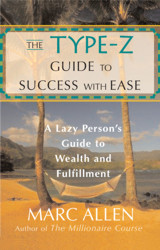 Something about this book really resonated with me. Because I have worked for decades in a stressful and demanding job, I found the relaxing nature of the author and his content to be very refreshing. Marc Allen shares the secrets of success for people who aren’t driven and aggressive. Yet, they are highly effective for people who want to take a more casual approach to success.
Although this book is more focused on business and motivation than on personal finance, it does offer a sound formula for becoming successful. The visualization and goal-setting techniques are useful for any pursuit, including finances.
This book may not appeal to everyone, but I love it and I have read it many times. It has helped me in my own pursuits and that’s where most books fail to deliver. Any success starts with a goal. This book teaches how to create goals and then visualize their accomplishment.
Rich Dad Poor Dad
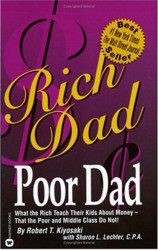 This is probably the most controversial book on personal finance ever written. People either love or hate this book passionately. I found it to be a little heavy on repetition, but the message is definitely worth considering.
The author supposedly had “Two Dads”. His real Dad was highly educated but broke and his best friend’s Dad had made a fortune in business, despite a modest start. The theme of the book is that his Poor Dad pushed him to pursue a safe career path, while the Rich Dad pushed him to start businesses and make investments to provide financial security.
Criticism of Kiyosaki often centers around his recommendation of heavy debt and his contempt for financial investments. Others doubt his investment claims and believe most of his money was made selling books. While I acknowledge these criticisms, I don’t feel it is necessary to agree with everything in a book to gain something useful from it. I believe he shares two very important concepts. First, the advantages of business ownership versus income-based employment and the potential pitfalls of relying on a career path. Second, the advantages of owning real assets versus financial assets.
The Wealthy Barber
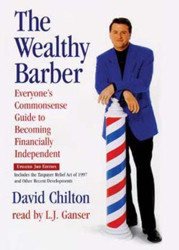 The personal finance community frequently recommends this book. After reading it, I can see why it comes so highly recommended. It’s a simple yet complete introduction to all of the most important principles of personal finance.
The fictitious backdrop for this book is a local barbershop in Port Huron, Michigan. Roy, the “Wealthy Barber”, dispenses his no-nonsense financial advice while he cuts the hair of three people who are seeking help with their finances. During each visit, they complete a different section of Roy’s course. Then, they are required to take action, such as starting an investment and writing a will. Finally, they pass Roy’s course and receive a diploma.
Although the financial advice is pretty basic, this is a great book for someone who needs a complete introduction to personal finance. This is one of the few books I have read that provides a step-by-step plan and encourages immediate action. It explains each subject thoroughly, including the benefits and consequences of most financial actions. It’s laid out in an intelligent fashion and is easy for anyone to read and understand. It’s also short and to the point.